2020 · Crisis Manufacturing
PPE Manufacturing Response
In March 2020, our lab went from a college research space to an emergency manufacturing floor. Three products. Constant supply chain pressure. One award. Here is how it actually happened.
3
Distinct PPE products engineered
Spring
2020 rapid production response
↑
Output per redesign cycle
1
Ontario Minister's Award for Excellence
The Situation
The lab should have been full of students.
In March 2020, we were one of the few teams still showing up to campus. Not because there was a plan. There wasn't one. But we had machines, we knew how to run them, and hospitals 20 minutes away were running short on protective equipment.
I was part of the operations team at Sheridan's Centre for Advanced Manufacturing and Design Technologies. When the call came to redirect the lab toward emergency production, we didn't wait for a detailed brief. We figured it out as we went.
01 · First Response
It started with the printers.
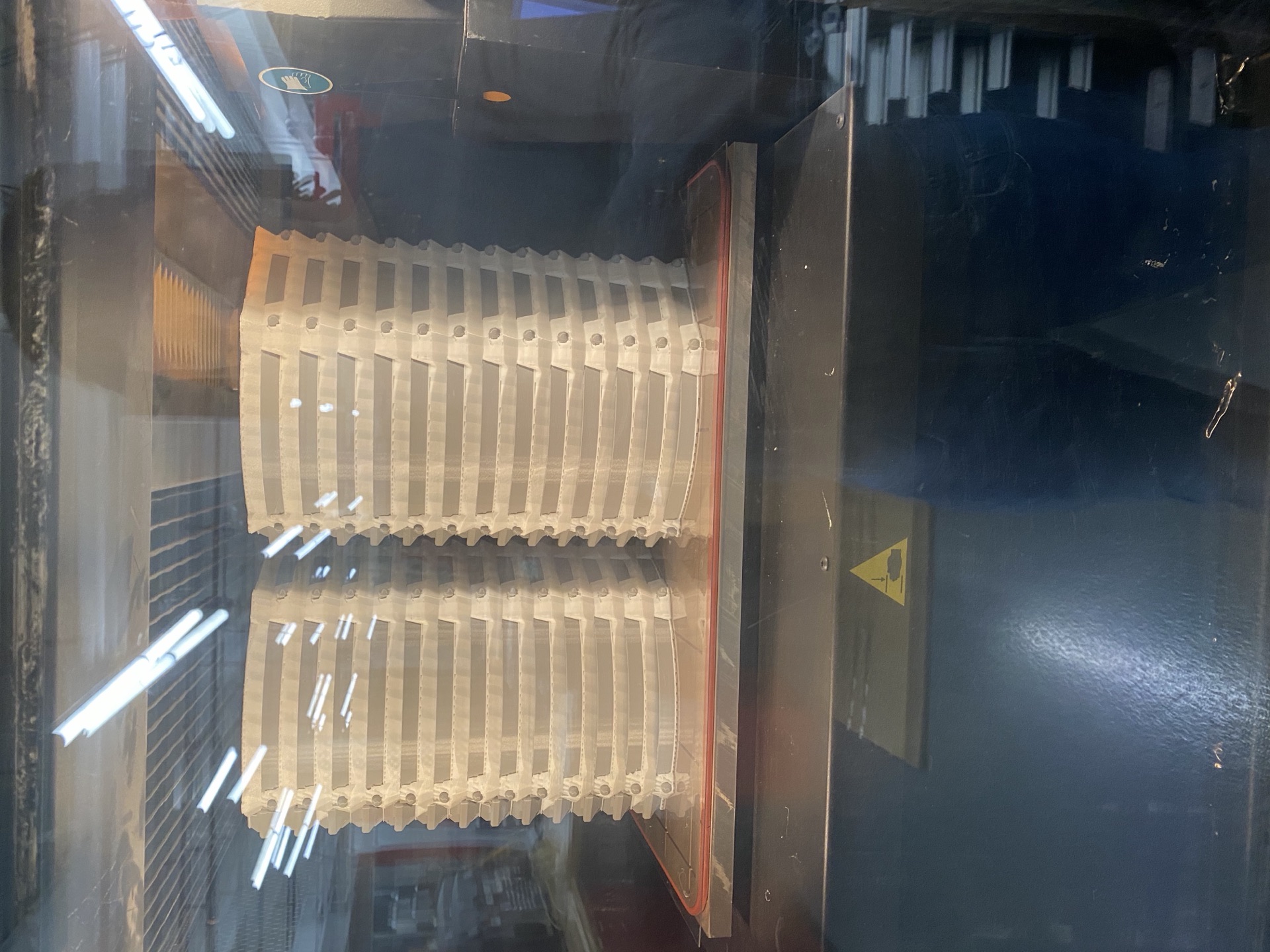
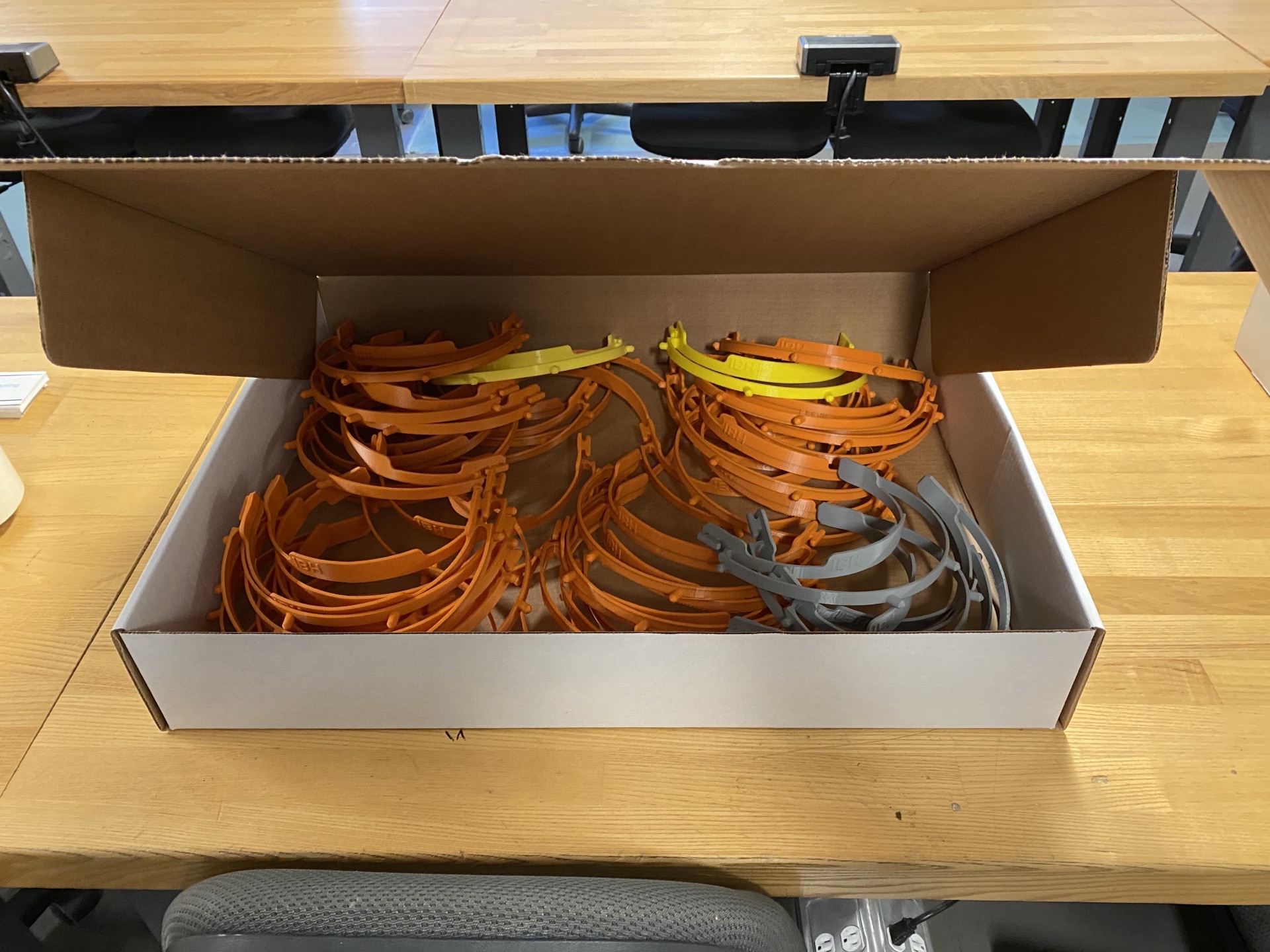
The first product was a fully 3D printed face shield. Headband, frame, visor clip, everything. I helped work out the print schedules: how to nest parts on each bed, which settings gave the best balance of speed and structural integrity, how to keep the machines running without burning them out.
That photo is what a single print cycle looked like at capacity. Two full rows of headband frames packed as tight as the bed would allow. Every cycle like that was another batch of shields ready to go out.
02 · Assembly
We weren't running a factory. We were improvising one.
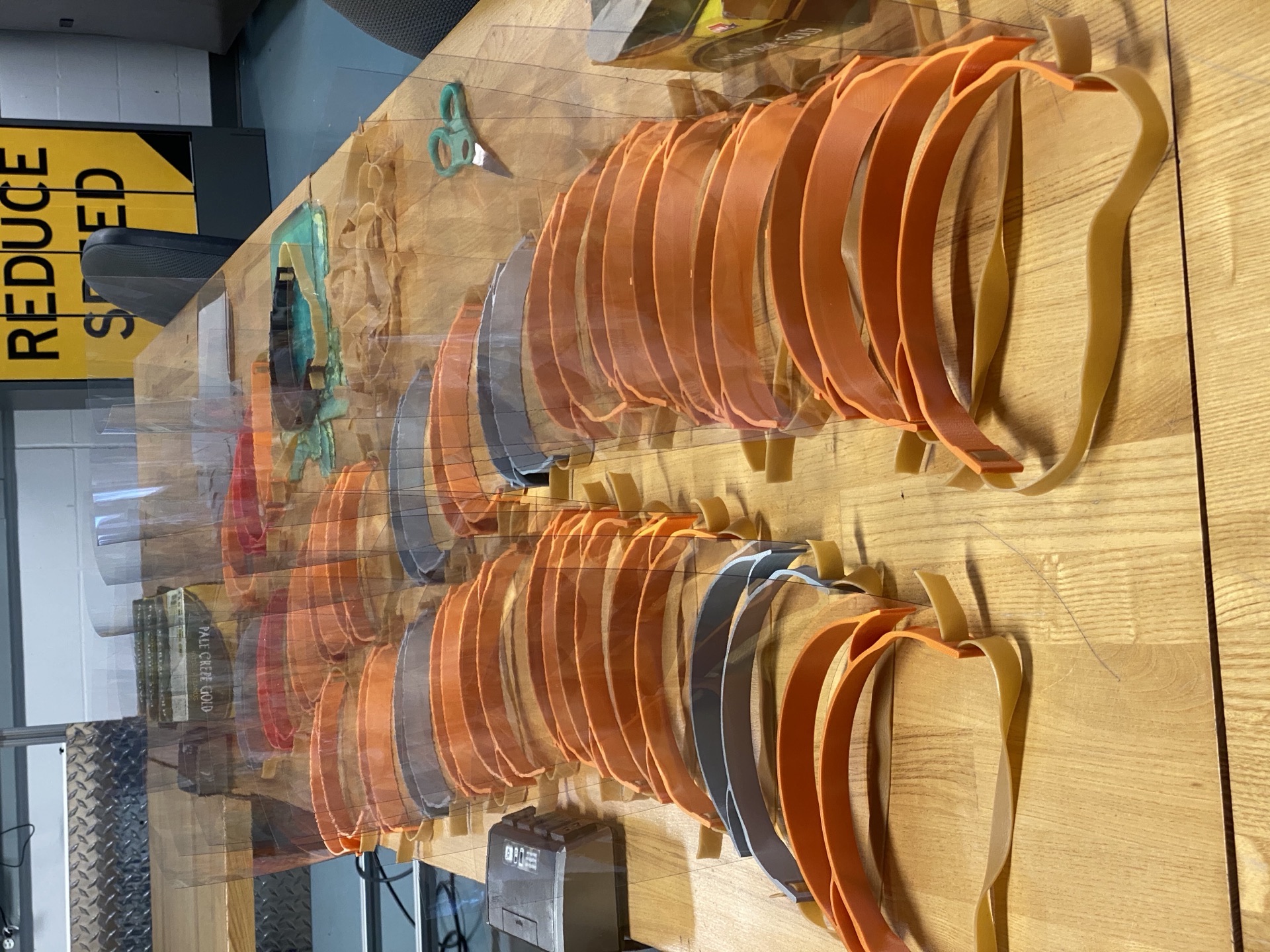
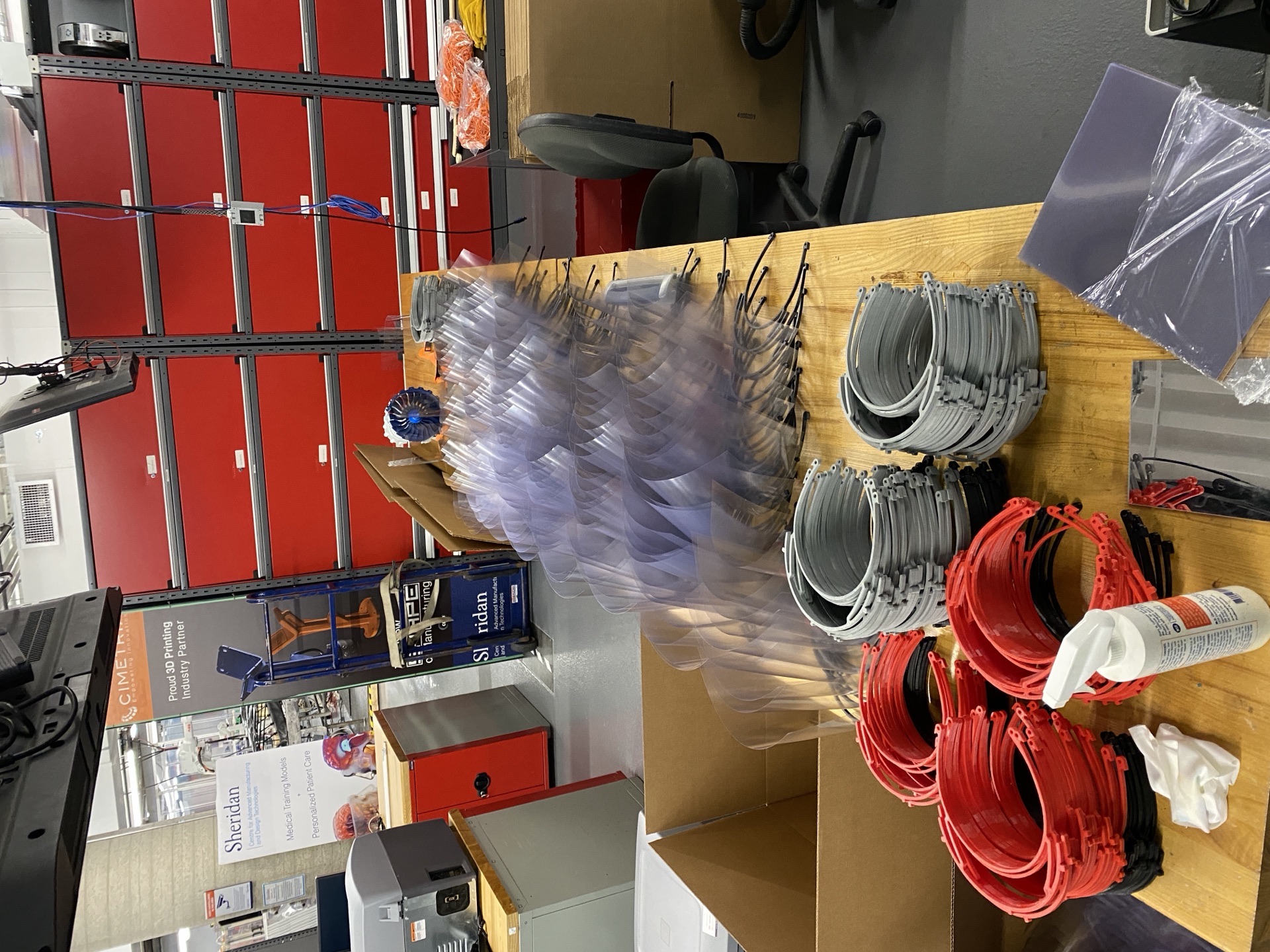
Every morning we'd pull the night's prints off the machines and carry them to the workbench. Peel the protective film, snap in the visor, inspect, spray down, package. It wasn't elegant. It was consistent, and we kept moving.
We were a small team doing all of it ourselves. No dedicated assembly workers, no production line in the traditional sense. Just people who knew the space and showed up every day.
03 · The Pivot
The printers couldn't keep up. We redesigned in a weekend.
About three weeks in, the math stopped working. Each shield took hours to print, and even with every printer running around the clock, the output curve was nowhere near demand. The bottleneck was time, not material.
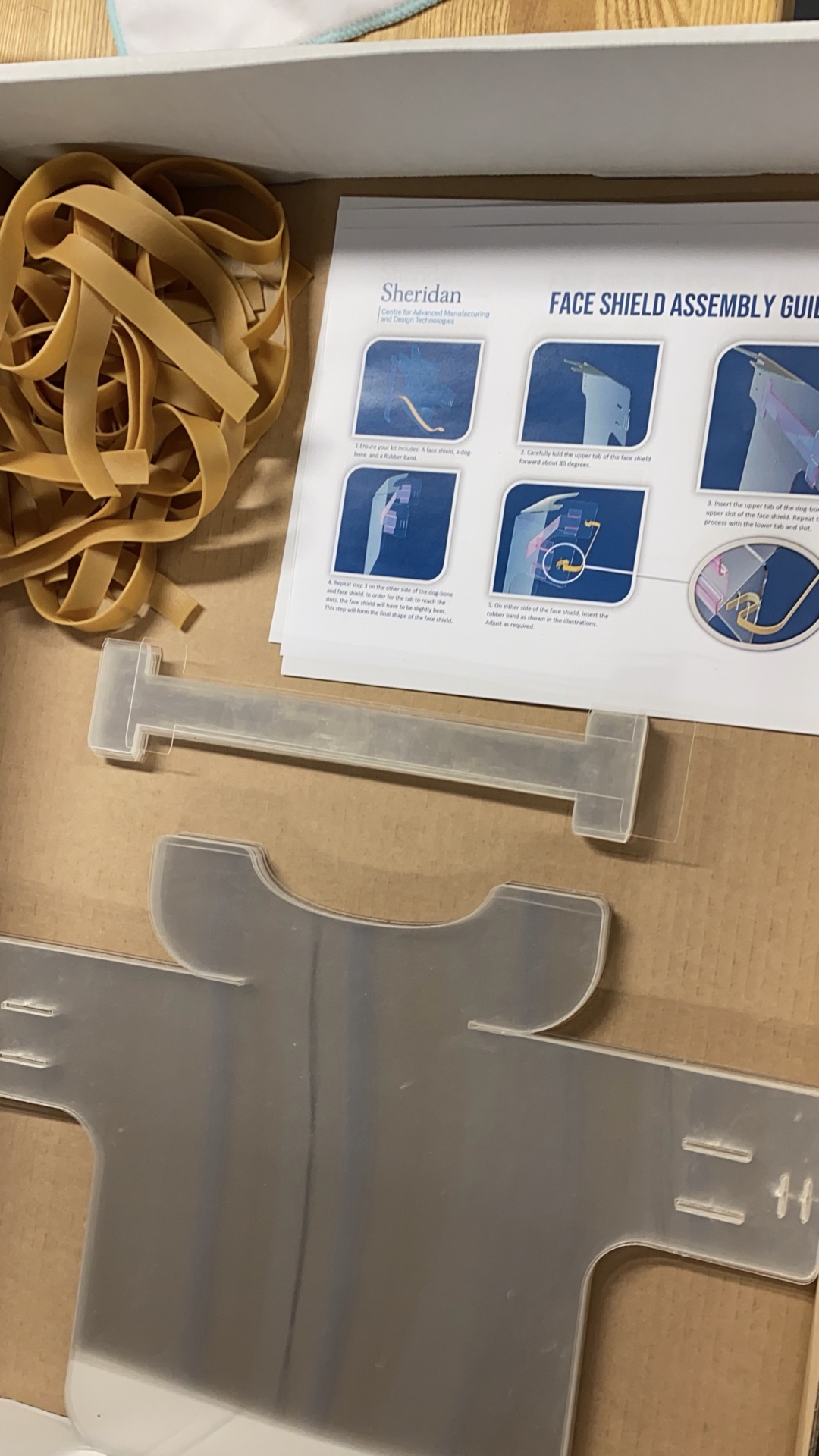
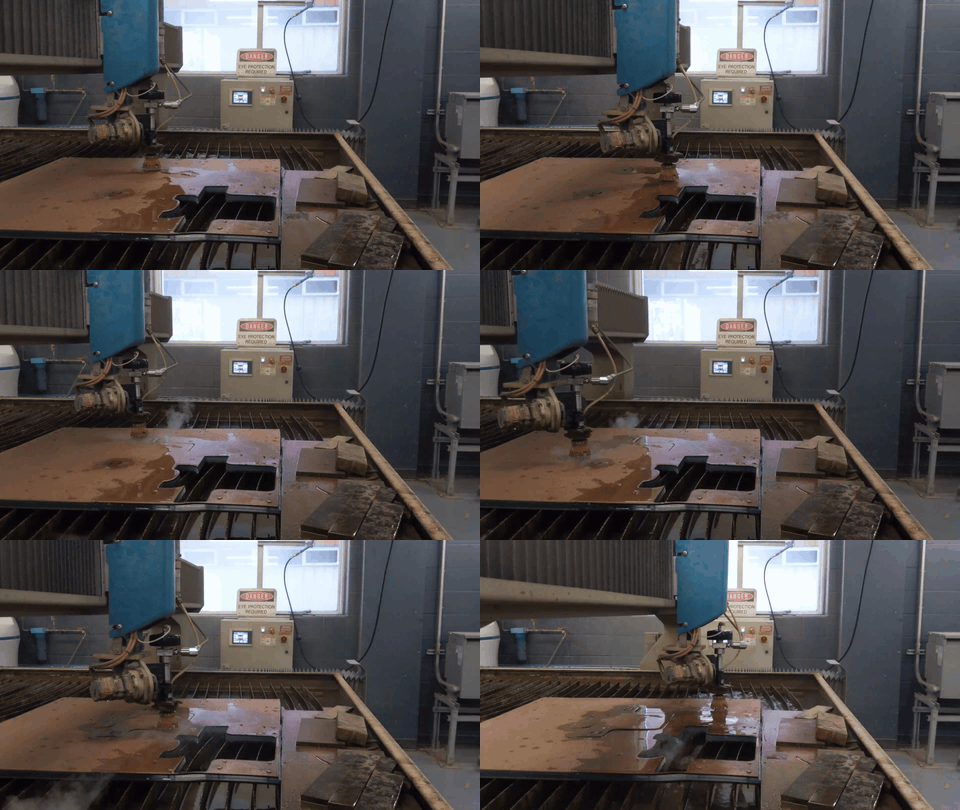
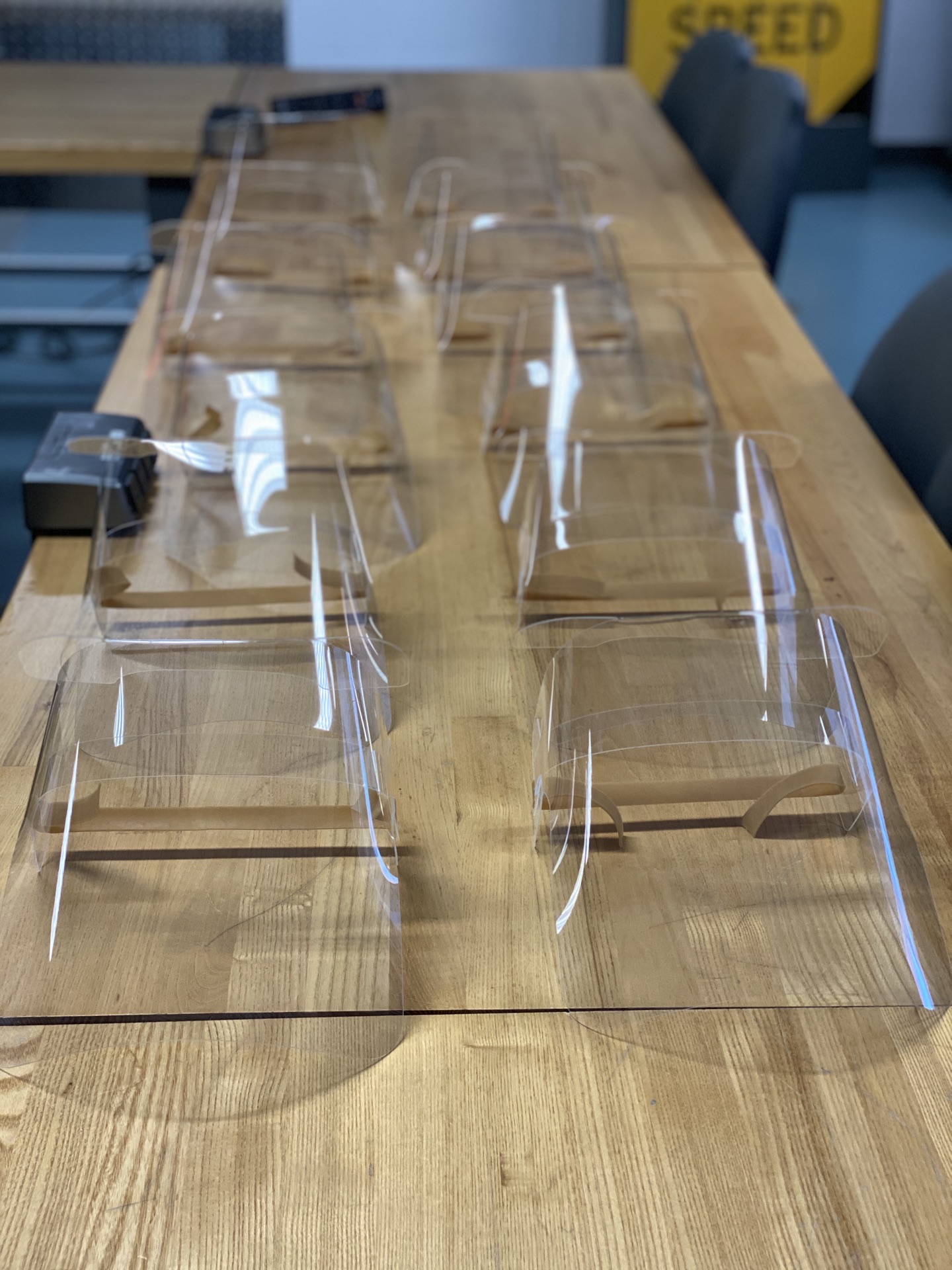
We brought the laser cutters and waterjet online and moved to a design that suited them: one flat sheet of PETG, scored and folded, with a rubber band as the headband. By sandwich-stacking sheets on the waterjet bed, we could cut hundreds in a single pass instead of one at a time. We adapted a flat-pack pattern to our equipment, tuned it for our stock, and wrote a one-page assembly guide so recipients could build it at home.
It sounds like a step down. It wasn't. We went from 20 shields a shift to multiples of that, cost per unit dropped, and the flat-pack shipped far more units per box. The constraint forced a better product.
04 · The Coca-Cola Run
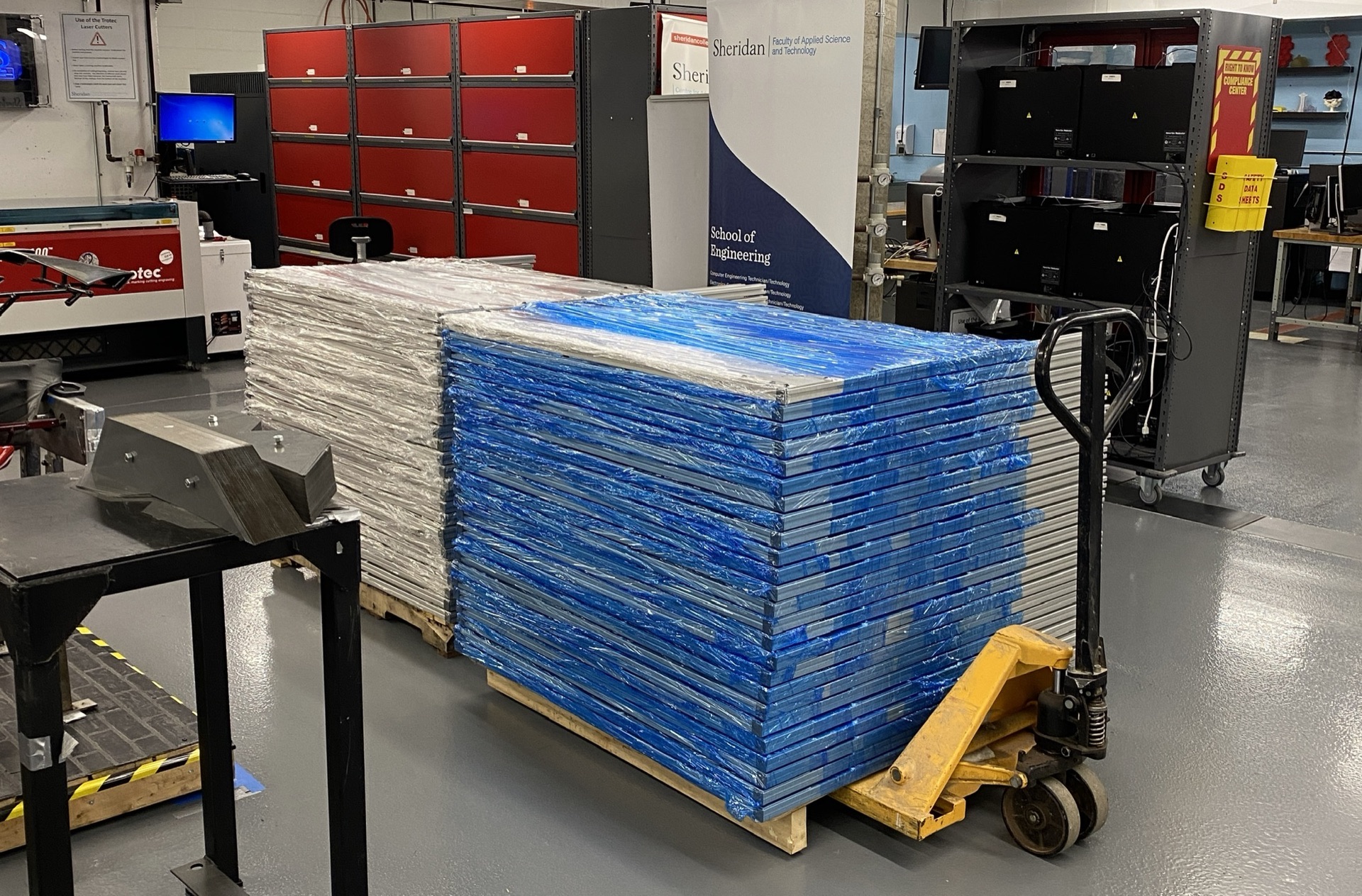
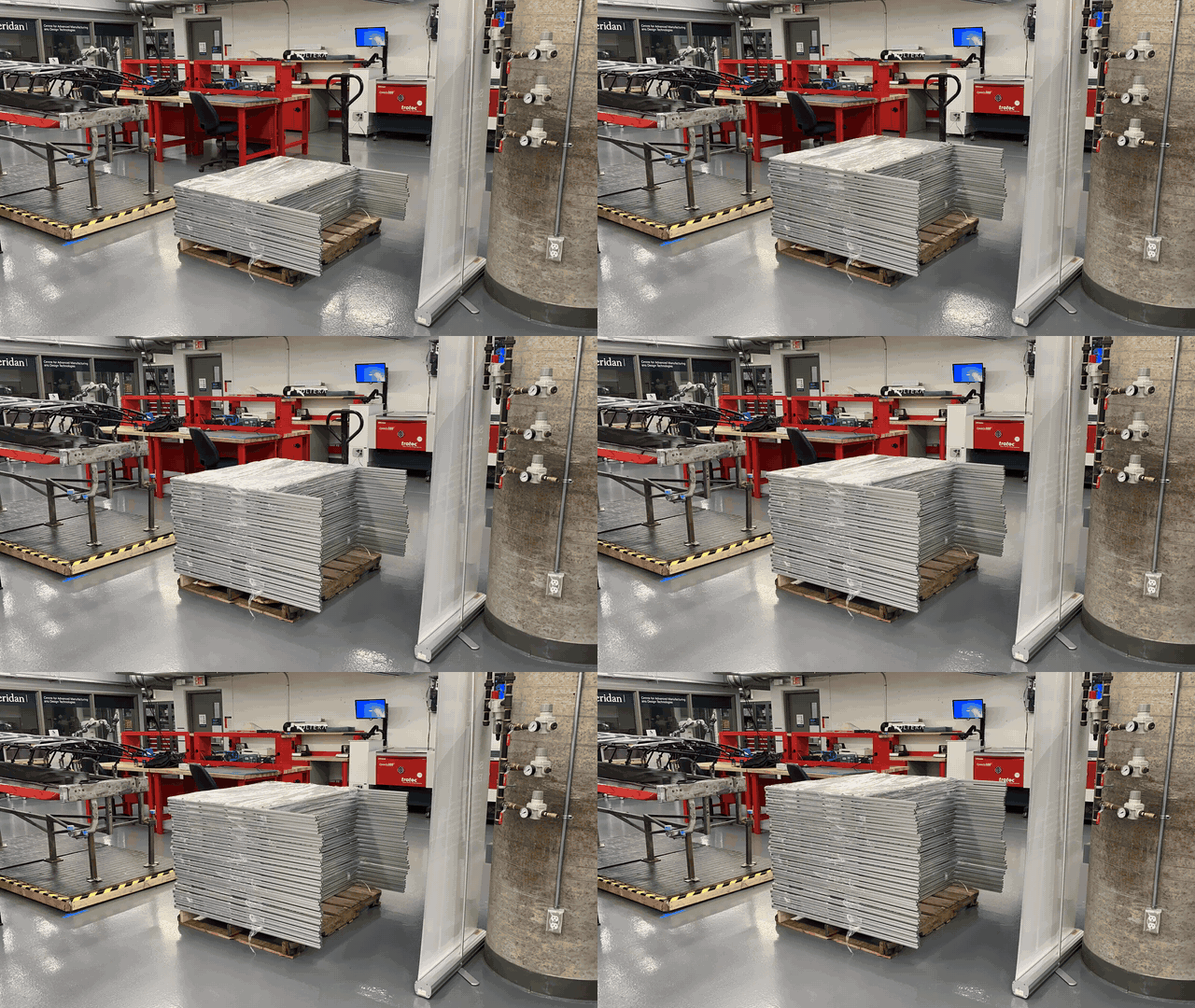
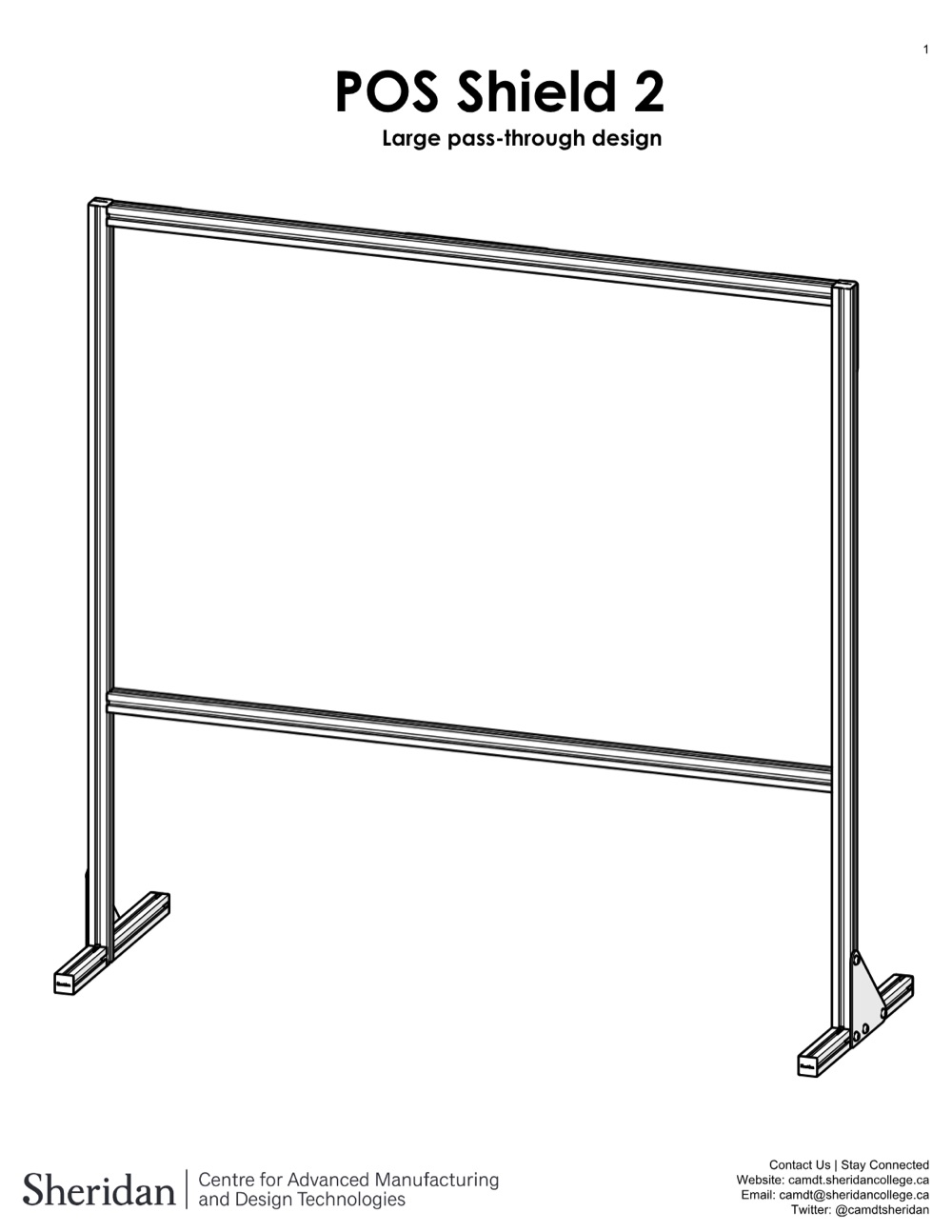
Coca-Cola Bottling joined the effort. We engineered POS shields from PETG.
When Coca-Cola Bottling joined the effort to fund and distribute a wave of point-of-sale shields, the brief was direct: counter barriers for grocery, pharmacy, and retail, at volume, fast.
The same supply shock was still in play. Acrylic, the obvious choice, was sold out across North America. What we did have were pallets of thin PETG sheets left over from the foldable face shield runs.
We engineered the shield as a flat-pack assembly kit built around that PETG. Every kit shipped with a one-page assembly guide so the recipient could put it together at the counter, no tools required.

 1 / 8
1 / 8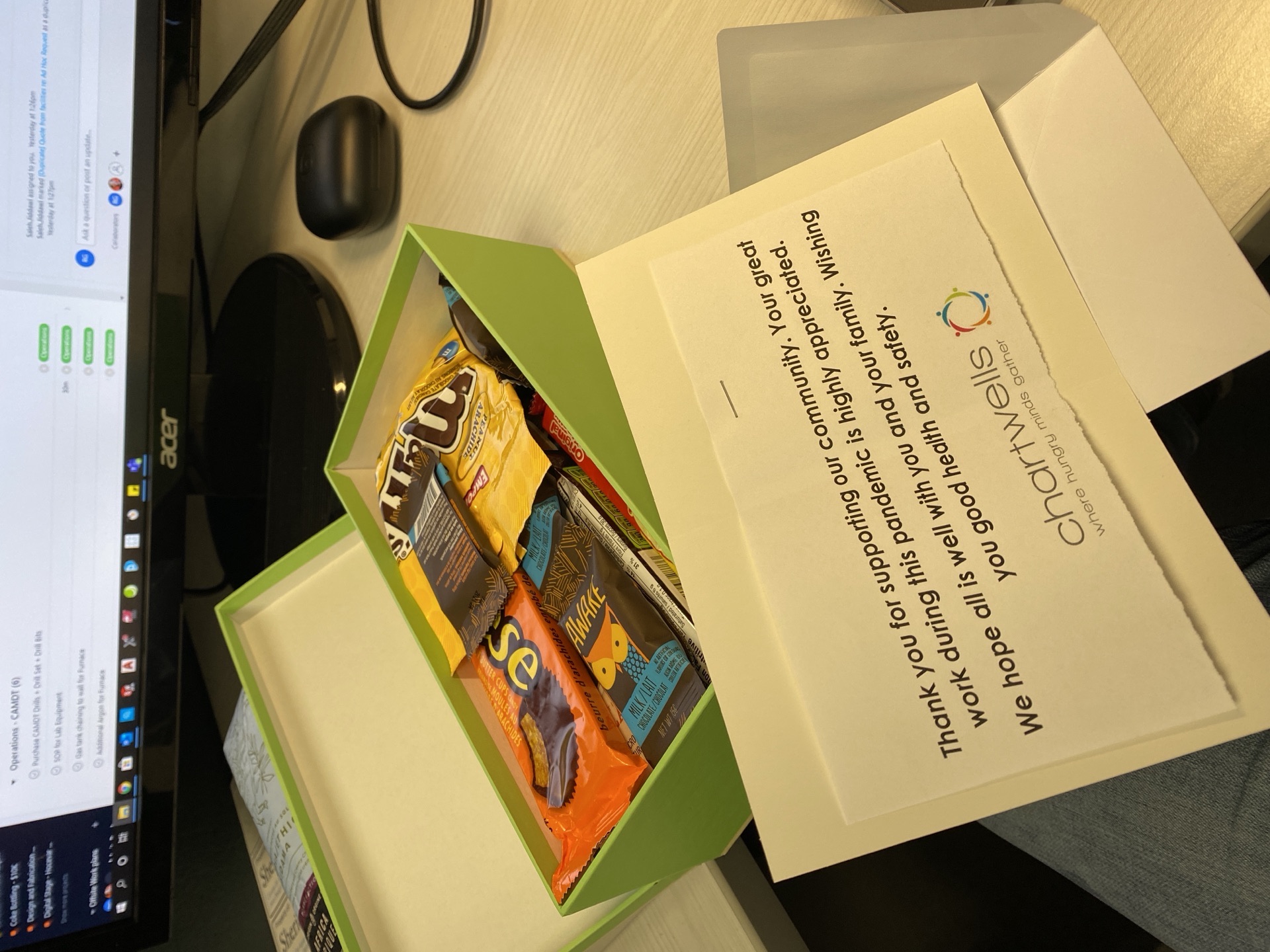
05 · Community
We didn't expect to hear back. Then the notes started.
One afternoon a care package showed up on a desk from Chartwells. A box of snacks and a card thanking the team for supporting the community and recognizing the work being done.
06 · Recognition
Then Premier Ford walked through the door.
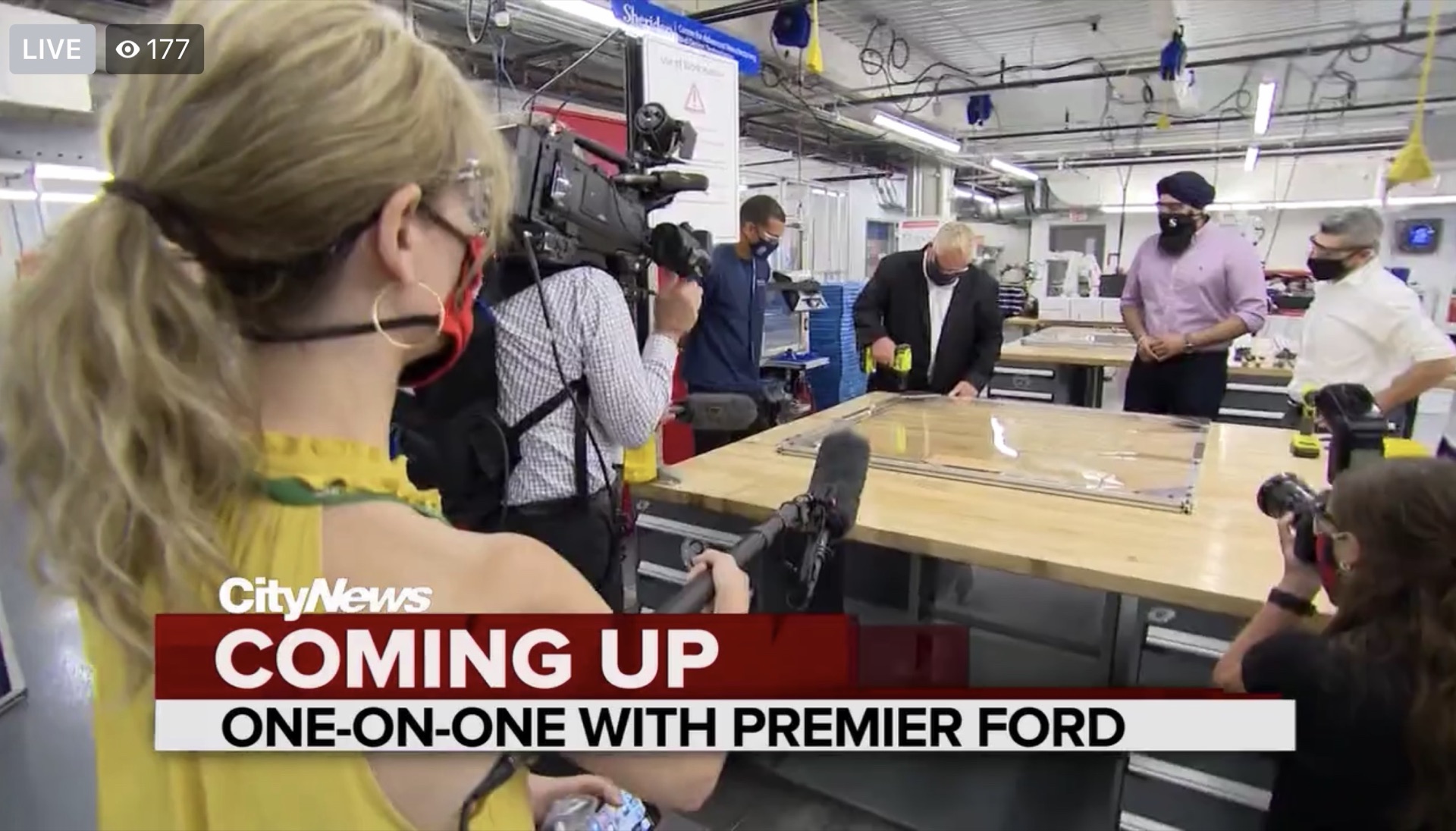
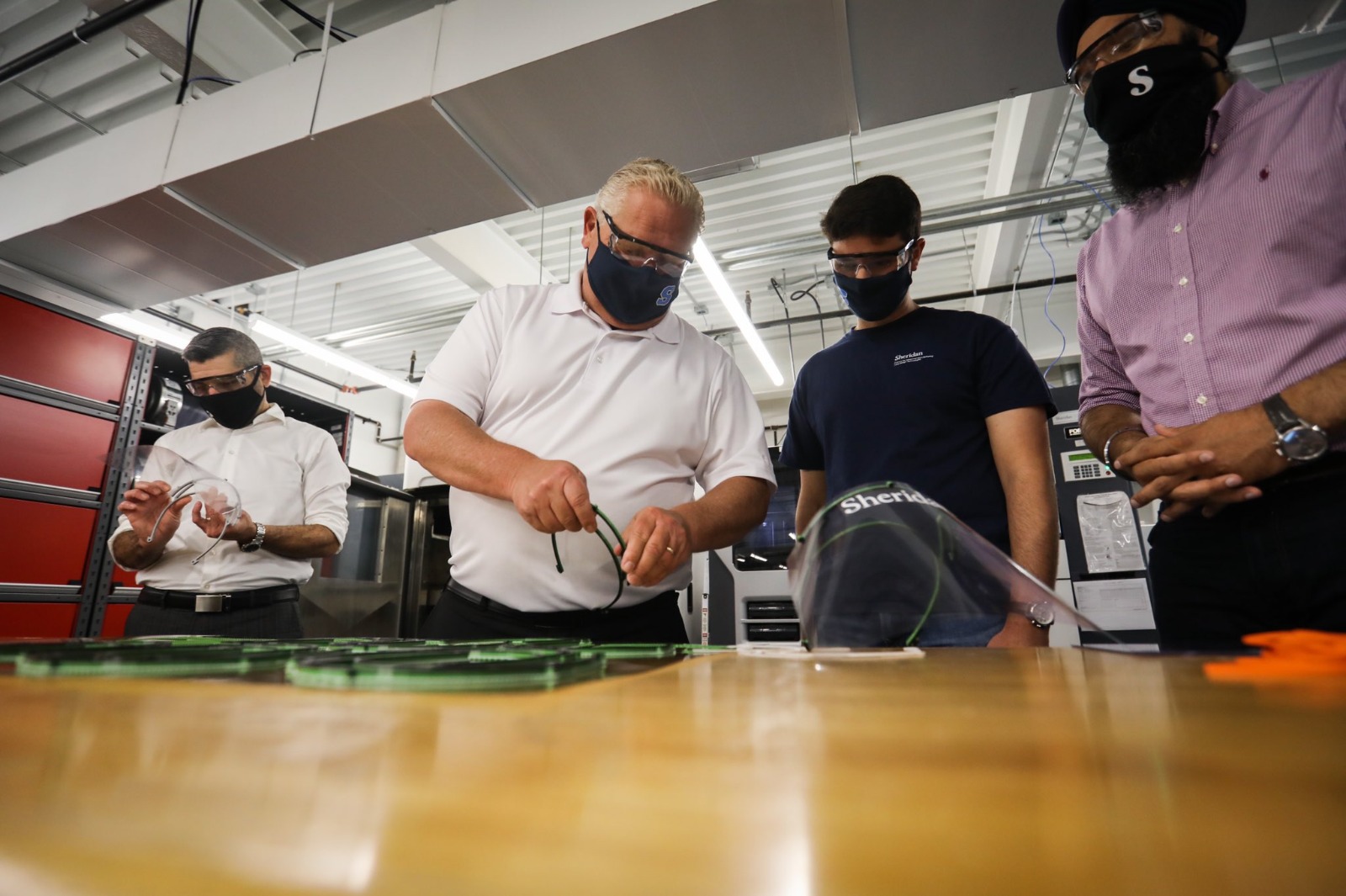
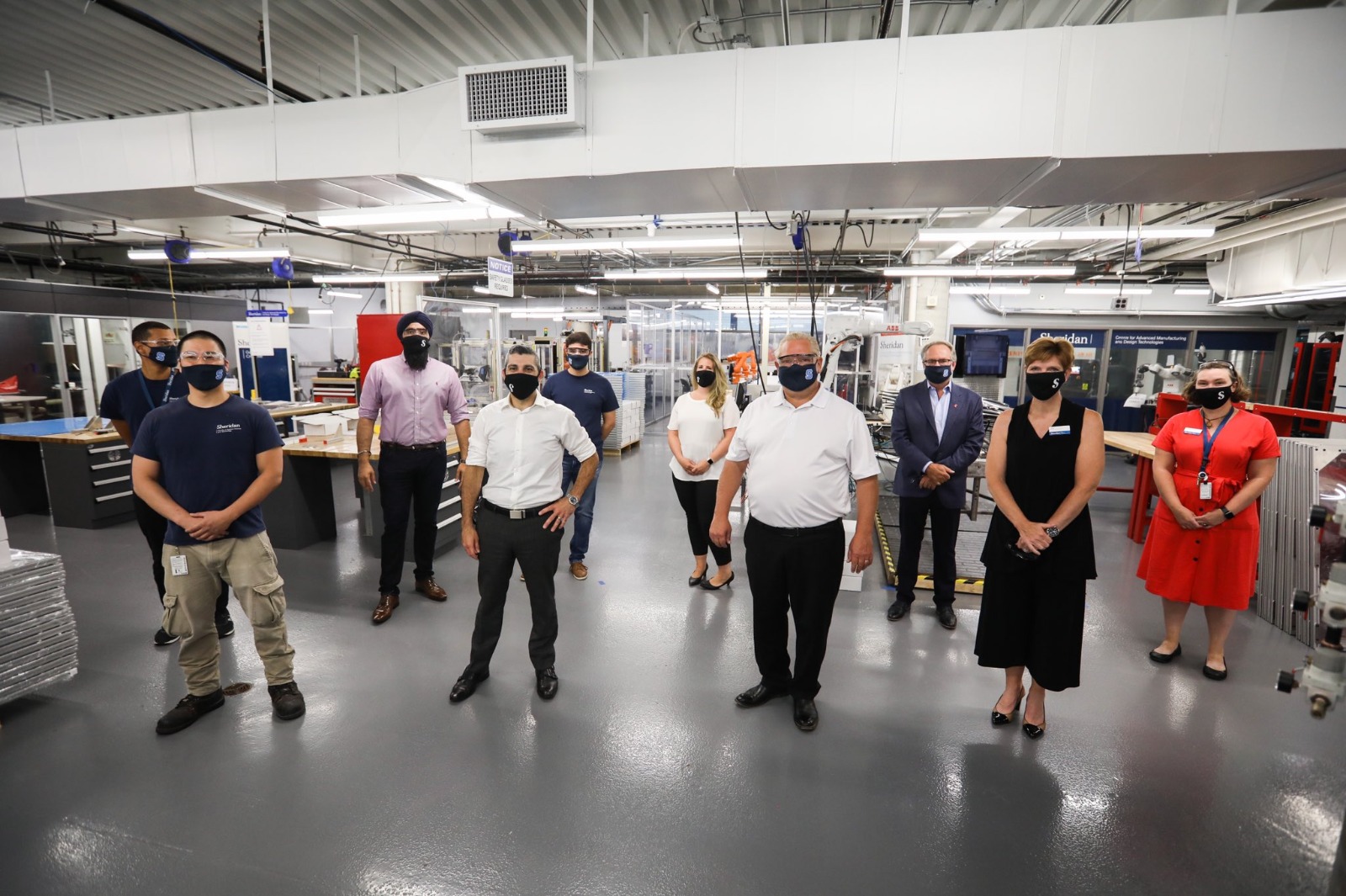
The work eventually attracted attention from Queen's Park. Premier Doug Ford came to the lab. CityNews was there broadcasting live. The Premier stood at the workbench and assembled a shield. I was right next to him, walking him through how it went together.
It was surreal to be standing in that room with cameras pointed at something we'd built in a few weeks out of necessity. The lab that was empty in March had become the story.
07 · The Award
Ontario Minister's Award for Excellence. September 2020.
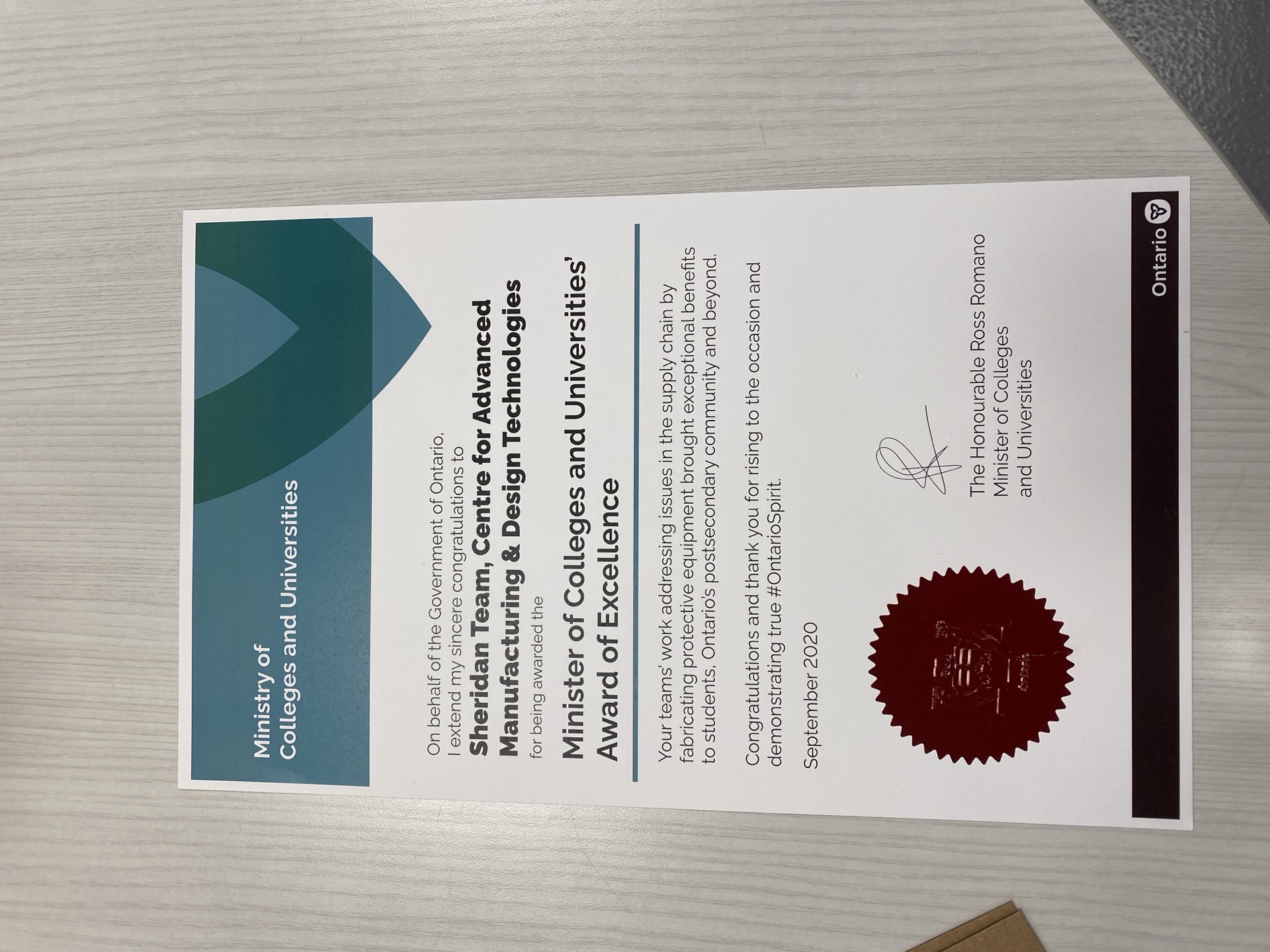
In September 2020, the team received the Ontario Minister of Colleges and Universities Award of Excellence, signed by Minister Ross Romano. The certificate recognized the team's work addressing supply chain issues by fabricating protective equipment that brought exceptional benefits to students, Ontario's postsecondary community and beyond.
I'm proud of this. But what I think about when I look at it is the specific moments: the nights we ran the printers, the weekend we redesigned the product when the printers couldn't keep up, the truck I loaded myself to make the delivery run. The award is a document. The work was real.
It's the clearest example I have of what operations under pressure actually looks like. No complete information, no stable supply chain, no time to plan properly. A problem in front of you, and a team willing to figure it out.
Team & Credits
Michelle Chretien
Director, CAMDT
Led the effort and coordinated with stakeholders for visibility and the strongest impact across communities.
Saleh Jiddawi
CAMDT Manager
Empowered the team and built systems that streamlined work at a time we could not afford red tape.
Simon Heathcote
Manager, MEET Labs
Coordinated space and brought invaluable engineering expertise.
John Phillips
Researcher
Tailored the design to respond to supply chain challenges.
Raymond Sunkit
Research Assistant
Assembled and operated equipment as the man on the ground.
Mohamed Kasim
Volunteer
Created the renders and instruction manual for the foldable face shield.
Want to work together?
I am open to discussing new projects and creative collaborations.